Wills in Costa Rica: what a will is and why you should have one

A will is the only way to decide for yourself who receives what you own when you are gone, instead of leaving that decision to the law and, all too often, to a family dispute. In Costa Rica many people believe a will is "for rich people" or that "the family will sort it out," and, according to a 2026 ILN analysis that cross-references deaths registered by the TSE (Costa Rica's civil registry) with wills recorded at the National Archive, 94 out of every 100 people in Costa Rica die without ever having made one. The usual result is a long, expensive and sometimes bitter probate (succession proceeding), with the assets frozen while it drags on. The good news is that Costa Rican law gives you a great deal of freedom to distribute your estate as you wish, with one important limit: the duty to provide support (alimentos) for the people who depend on you. This article explains, in plain terms, what a will is, who it makes sense for, what you can and cannot put in writing, and how to get it right the first time. If you want to know whether your situation is simple or needs something more, start with the test.
In short
Do I need a will? If you own anything —a house, a car, a bank account— or someone depends on you, yes: it is the only way to make sure you decide the distribution and not the fixed list in the Civil Code.
Does a will avoid probate? No. A succession proceeding still has to be opened, but it is usually shorter and with much less to argue about.
Can I leave my property to whoever I want? Yes, with one limit: you must secure support (alimentos) for minor children or children with a disability, and for parents and a spouse who depend on you (art. 595).
Can I change it later? Yes, as many times as you like, with a later will (art. 621).
What happens if I die without a will? The order in article 572 inherits: children, parents (including foster ones) and the spouse or common-law partner; then grandparents, siblings, nieces and nephews, aunts and uncles; and if there is nobody, the State.
What a will is (and what it is not)
In Costa Rica, a person's succession opens at the moment of death, and nothing about that inheritance can be agreed upon while the person is alive, even with their own consent (Civil Code, art. 520). What you can do while you are alive is set down, in the form the law requires, how you want your estate to be divided. That is a will: a person's wishes, "legally expressed," about what should happen to their property. When those wishes exist, the estate is distributed according to them; when they do not, the law distributes it (art. 522). The first is called testamentary succession; the second, intestate succession (dying "intestate").
Three features define it:
It is strictly personal. Nobody can make a will on your behalf, not with a power of attorney and not by delegation, and you cannot leave it to someone else to decide later who inherits or what each person receives (art. 577). Whatever is not in your will cannot be "filled in" by anyone.
It is revocable. You can change it as many times as you like, in whole or in part, with a later will, and that right cannot be waived (art. 621). A will is not a decision for life: it is a snapshot of what you want today, which you update as life changes.
It requires capacity. To make a will you must be "of sound mind" and at least fifteen years old (art. 591). The law also requires legal capacity both when the will is made and when the succession opens (art. 590). You do not need to be of legal age; what you need is mental clarity when you sign. That capacity is the first thing challenged when someone wants to contest a will, which is why making it early, while healthy and free of pressure, is the best protection.
What goes into a will? The essentials: who your heirs are and in what proportion; specific bequests (the house to one person, the car to another, a sum to a foundation); who you name as executor (albacea), meaning the person who will administer the estate and represent it until it is distributed (arts. 542 and 548); and a substitute appointment in case an heir dies before you or does not wish to accept (art. 582). You can also leave instructions about matters that are not property, such as the care of your minor children.
What is a will not? It is not a contract: it binds nobody while you are alive and takes no control away from you. It is not life insurance: it creates no new money, it only organizes what is there. And it is not a way to avoid probate: even with a will, a succession proceeding still has to be opened to transfer the assets, normally shorter and cheaper, with much less to argue about over who inherits. Assets already transferred during life to a properly structured trust generally do not have to go through the succession; but that is another tool and another conversation.
Why you should have one
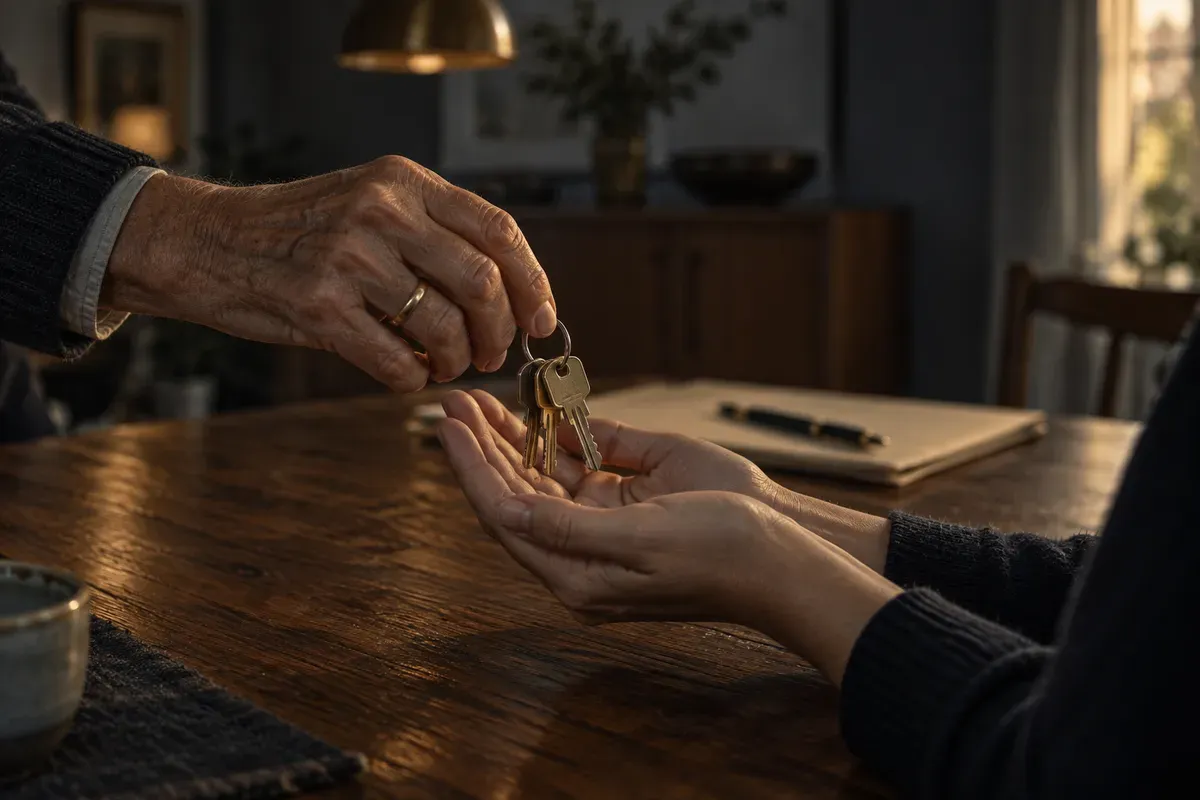
The question is not whether you have "enough" to justify a will. It is what happens to what you do have, a house, a car, a bank account, a lot, and to the people who depend on you, if you are not here tomorrow. These are the real reasons.
Because if you do not decide, the law does
If a person dies without disposing of their property, their legal heirs inherit (art. 571): the people listed in article 572 of the Civil Code, in a fixed order. First the children and the parents —including foster children and parents, since 2022— and the spouse or common-law partner, all together and in equal shares. If there is nobody in that group, the grandparents; then the siblings; then the nieces and nephews; then the aunts and uncles; and if no relative with a right to inherit turns up, the local Boards of Education (Juntas de Educación) of the place where the assets were located —that is, the State— and, under a 2025 reform, the Red Cross.
That order does not ask who took care of you, who needs it most or what you would have wanted. And your spouse does not inherit "everything", nor do they inherit "on top of" their marital (community) property share: the law counts what they already receive as marital property against their share, and they only take from the estate what is missing to equal one heir's portion (art. 572, para. 1.b). If their marital property already equals or exceeds that portion, they receive nothing more from the estate. Meanwhile, your parents, if they are living, join the distribution together with your children: many people find out too late that the in-laws are on the list. If you want to see how your estate would be divided under the law, the succession guide shows you in five minutes, based on your own answers.
Because you protect the people the law does not see
The list in article 572 is closed, and it has conditions. Your partner, if you never married, inherits only if the common-law union (unión de hecho) meets what the law requires —public, notorious, single and stable, for more than two years, between two people with legal capacity to marry (Family Code, art. 245)— and only over the assets acquired during the union (art. 572, para. 1.ch). That union is established within the probate proceeding itself, with no prior family-court case (Law 10228 of 2022), but it must be requested within two years of the death (Family Code, art. 246): it is evidence that has to be produced, with witnesses and documents, at a time when the family is grieving. The child you raised without adopting can inherit since 2022: Law 10166 included foster children and parents in the first order, defining fostering as care assumed in fact, free, voluntary and permanent until the age of majority; but there is no "foster-care certificate": the law created no prior procedure, so the status is proven within the probate proceeding itself, by appearing during the notice period and demonstrating what article 2 of the law requires —free, voluntary and permanent care until the age of majority— with witnesses and sworn statements, school records, CCSS or PANI records, receipts, photos or insurance policies; the First Chamber of the Supreme Court has already accepted that kind of evidence assessed as a whole (ruling 678-F-S1-2026). If nobody objects, the notary can declare them an heir; if someone does, the matter goes to the civil court and is resolved by motion (Code of Civil Procedure, arts. 123 and 127; Notarial Code, art. 134). And the person who takes care of you, your best friend, your church, a foundation: nothing.
This is where the Costa Rican system has a great advantage. Unlike many countries, where the law requires you to leave a fixed forced share to your children, in Costa Rica the testator "may dispose freely of their property" (art. 595). You can leave everything to a single person, include someone the law would ignore, or spare your partner and your foster child the burden of proving in probate what you already know. The only limit is support: you must make sure your minor children, or children with a disability that prevents them from providing for themselves, are provided for, along with the maintenance of your parents and your spouse for as long as they need it. Beyond that, the distribution is yours. But it is yours only if you write it down: an "understood" wish leaves nothing to anyone.
Because you spare your family the dispute and the long probate
Even though the law says who inherits, a succession proceeding still has to be opened to declare the heirs, inventory the assets and transfer them (Code of Civil Procedure, art. 115). When everyone agrees and there are no minors or legally incapacitated persons involved, that proceeding can be handled before a notary public (Notarial Code, art. 129). But it takes only one interested party objecting for the notary to have to suspend everything and send the file to the court (Notarial Code, art. 134). And judicial probate is the slow, expensive route: the assets stay blocked while it moves forward, the fees are calculated on the value of the estate, and a contested case can drag on for years.
A will does not eliminate probate, nor does it guarantee that nobody will dispute it: the validity, the capacity, the interpretation, the inventory or the support obligations can all be contested. What it does do is substantially reduce the most common source of conflict: the argument over who inherits and in what proportion. When the distribution is already in writing and an executor has been named, the family enters the proceeding with much less to decide.
Because it is inexpensive, quick and reversible
Making an open will before a notary public takes a single appointment, with the document prepared in advance, and its price is a fixed statutory fee schedule set by law, not a rate the notary invents. It is a fraction of what a disorderly probate consumes, and it is reversible: since a later will cancels whatever in the earlier one contradicts it (art. 622), updating it when you marry, divorce, welcome a grandchild or buy a house is as simple as making a new one. The exact amounts and what each item includes are in how much a will costs.
Because it is the only way to name an executor and provide for your children
Without a will, the executor is appointed by the heirs in a meeting (art. 542), which means it is chosen by the very people who may be in disagreement. With a will you choose, and you choose well: not necessarily the eldest child or the closest relative, but the person with a good head for administration and good relations with everyone, because they will be the administrator and legal representative of the estate (art. 548). More in what an executor does. And if you have young children, the will is the place to set out who you want to care for them and how what you leave them is to be managed while they grow up; without that provision, those decisions are left to a judge and to whatever the law provides.
Because making it early makes it solid
A will can be contested, but not for just any reason: for defects of form, for lack of capacity of the testator, or for defects in consent, such as pressure or deceit. All of those doors are closed by doing it properly and in time: with clear capacity (arts. 590 and 591), with witnesses the law accepts, with the formalities completed in a single act (art. 585) and, if the distribution departs from what was "expected," with legal advice that makes clear it was your decision. A will made at fifty, healthy and at peace, is very hard to overturn. One made in the hospital, under pressure from a child, is exactly the opposite. The grounds are in when a will can be annulled.
The myths that keep people from making a will
Most of the reasons people put off their will are not legal: they are beliefs. These are the most common ones, and why they do not hold up.
"A will is for rich people." It is exactly the opposite. Someone with a large estate usually has lawyers, companies and trusts that keep things in order even without a will. The person with a single house, a car and a savings account is the one who loses the most in a long probate, because the fees and expenses eat into an estate that has no margin. A will costs what the statutory fee schedule sets: little, and only once.
"The family will sort it out." Sometimes it does. But it still does so inside a succession proceeding, and only for as long as nobody changes their mind: it takes one objection for the notarial proceeding to go to court, as we saw above. A will does not replace a family's affection: it removes the occasion to fight.
"It's bad luck" or "it's for old people." Making a will does not hasten anything. What it does is ensure that, if the worst happens, the people you love do not have to add a legal problem to their grief. Young parents with small children are precisely the ones who need it most and make it least. And for an older adult it is not "too late": as long as there is mental capacity, a will can be made, and making it while healthy and lucid is what makes the document solid.
"If I'm married, everything goes to my wife (or my husband)." No. The spouse concurs with the children and with the parents of the deceased, and what they already receive as marital property is deducted from their share (art. 572, para. 1.b). If you want your spouse to keep the house you live in, it has to be written down.
"I already put everything in my children's names, I don't need a will." Transferring property during your lifetime has its own costs, taxes and risks: the asset stops being yours, with everything that implies if the relationship changes or if the child has debts or gets divorced. It is a decision that deserves advice, not a shortcut; there are ways to do it well, such as a gift with reserved usufruct, and they have to be weighed against a will (giving in life or leaving a will). And whatever you buy after that transfer is once again left unaccounted for.
A doctor with a private practice, a teacher with her house and her Magisterio pension, a retiree with a lot in Guanacaste: none of them is "rich," and all three have exactly the kind of estate that a disorderly probate turns into years of paperwork. If you recognize yourself in any of them, the test tells you where your plan stands.
What comes next: your map
This article is the front door. Each of the questions that will come up for you has its own guide, written with the same approach: the law cited, in plain language. They are grouped by the moment you will need them.
Making the will
How is it done, step by step? From the test to the notary's draft to the signing: what requirements the law sets, what documents to bring, how long each step takes and what decisions you will have to make. → How to make a will step by step
How much does it cost? The statutory fee schedule, what it covers, what add-ons exist (notary at your home, witnesses provided by the firm, urgent service) and the side-by-side comparison with what it costs to inherit without a will. → How much a will costs
Open or closed will? What each one is, who has to be present, why the open will is registered and "cannot get lost," and when someone might prefer the closed one. → Open will · Closed will
Who can be a witness? The point where the most wills fall apart: how many you need, who is disqualified and why choosing your "trusted" brother can invalidate the document. → Witnesses for a will
Can I leave my inheritance to whoever I want? How far the freedom to make a will under article 595 goes, exactly what the "support" (alimentos) you must secure means, and how to leave an unconventional distribution without loose ends that invite a challenge. → Freedom to make a will
If there is no will
Who inherits? The exact order of article 572, with examples of Costa Rican families and the cases that hurt: the unmarried partner, the child you raised, the in-laws in the distribution. → Who inherits without a will
How much does it cost and how long does it take to inherit, with and without a will? The side-by-side comparison in time, cost, control and conflict. → Inheriting with and without a will
Three situations where the law fails you most: if you have minor children, if you live in a common-law union or if you have a new partner and children from before.
After you make it
Who carries out your wishes? What the executor does, how they are appointed, whether they are paid and how to choose the right person. → What an executor is
Can I change it later? How it is amended and revoked, how often it is worth reviewing and why "I made mine fifteen years ago" can be a problem. → Changing or revoking a will
Can it be annulled? And can someone lose the right to inherit? They are two different things: annulment attacks the will for its defects; unworthiness excludes an heir for their conduct.
How do I find out whether someone left a will? Where to check, what papers you need and why a notarial will does not depend on finding the paper. → Finding a will
Probate
Before a notary or in court? When the notarial route applies, how the judicial one works and what each scenario would cost your family, with the probate cost calculator.
When a will is not enough
Several properties, a business, assets in another country, minor children who will inherit an estate: the cases where the will is the first step and not the last. → Estate planning · Trust vs. will · Assets abroad · Assets held in a company · Giving in life or a will · Reserved usufruct
The practical rule is simple: someone who owns a house needs a will and nothing more; someone with more assets, or a family with more moving parts, needs the will and a conversation about the rest. The test is designed to tell one case from the other using your own answers.
Frequently asked questions about wills in Costa Rica
At what age can you make a will in Costa Rica?
From the age of fifteen, provided the person is of sound mind (Civil Code, art. 591). You do not need to be of legal age.
Can I change my will after making it?
Yes, as many times as you like, with a later will. That right cannot be waived (art. 621), and the new will cancels whatever in the earlier one contradicts it (art. 622).
Does a will avoid probate?
No. Even with a will, a succession proceeding still has to be opened to declare the heirs and transfer the assets (Code of Civil Procedure, art. 115), but it is usually much shorter and can be handled before a notary public if there are no minors and no dispute (Notarial Code, art. 129). What can avoid it, for assets already transferred during life, is a properly structured trust; a will does not do that.
Am I required to leave something to my children?
There is no mandatory fixed share. What the law does require is that you secure support (alimentos) for minor children (or children with a disability that prevents them from providing for themselves), and the maintenance of parents and spouse for as long as they need it (art. 595). Beyond that, the distribution is free.
Does my partner inherit if we are not married?
Only if the common-law union (unión de hecho) meets the legal requirements (public, notorious, single and stable for more than two years) and is established within probate, over the assets acquired during the union. The direct way to secure it is to name them in the will.
Start with the test
Your will is not made in this article: it is made in a conversation with a lawyer who knows your situation. But you can take the first step right now, free and in five minutes: the testamento.cr self-assessment test shows you, from your own answers, where your estate plan stands, what is missing and whether your case is simple or needs something more.
Take the test →Would you rather talk to a person? Write to us on WhatsApp at +506 4070-9988 and we will set up a fifteen-minute consultation.
This article is informational and general in nature. It does not constitute legal advice and is no substitute for consulting a lawyer or notary public about your specific situation. Legal citations correspond to the text in force as of September 21, 2026; the law may change. testamento.cr is a service of ILN — International Legal Network, San José, Costa Rica.
References
Legislation (Sinalevi — Costa Rican Legal Information System, PGR)
- Civil Code of Costa Rica, Law No. 30 of April 19, 1885 (in force under Law No. 63 of September 28, 1887), arts. 520–522, 542, 548, 571–573 (572 reformed by Law No. 10166 of 2022 and added to by Law No. 10632 of 2025), 577, 582, 585, 590–591, 595, 621–622. https://sinalevi.go.cr/ResultadosNormativa/Informacion?param1=15437¶m2=148770¶m3=1
- Law No. 10166 of March 30, 2022, Reform of several laws for the recognition of rights of foster mothers and fathers (in force since November 6, 2022). https://sinalevi.go.cr/ResultadosNormativa/Informacion?param1=96845¶m2=129958¶m3=1
- Family Code, Law No. 5476, arts. 245–246 (renumbered by Law No. 10192 and text reformed by Law No. 10223, both of 2022). https://sinalevi.go.cr/ResultadosNormativa/Informacion?param1=970¶m2=145496¶m3=1
- Law No. 10223 of May 5, 2022, reform of article 242 (now 245) of the Family Code: common-law union of more than two years between two people. https://sinalevi.go.cr/ResultadosNormativa/Informacion?param1=97076¶m2=130550¶m3=1
- Law No. 10228 of May 5, 2022, authentic interpretation of art. 245 of the Family Code and of Law 7532: the common-law union is established within the probate proceeding itself. https://sinalevi.go.cr/ResultadosNormativa/Informacion?param1=97079¶m2=130572¶m3=1
- Law No. 10192 of April 28, 2022 (Sinca), art. 32: renumbering of the Family Code. https://sinalevi.go.cr/ResultadosNormativa/Informacion?param1=97181¶m2=130901¶m3=1
- Code of Civil Procedure, Law No. 9342 of February 3, 2016, arts. 41, 115–127 (126: notice to interested parties; 127: declaration of heirs; 123: objections resolved by motion). https://sinalevi.go.cr/ResultadosNormativa/Informacion?param1=81360¶m2=150778¶m3=1
- Notarial Code, Law No. 7764 of April 17, 1998, arts. 25, 41–42, 129, 133–134. https://sinalevi.go.cr/ResultadosNormativa/Informacion?param1=42683¶m2=148303¶m3=1
- Directive DNN 2001-005, Regulations for the notarial processing of non-contentious proceedings, art. 20. https://sinalevi.go.cr/ResultadosNormativa/Informacion?param1=47775¶m2=50748¶m3=1
- Fee schedule for professional legal and notarial services, Executive Decree No. 41457-JP, arts. 97 and 112. https://pgrweb.go.cr/scij/Busqueda/Normativa/Normas/nrm_texto_completo.aspx?nValor1=1&nValor2=88156
Case law and records (Judiciary — Nexus.PJ)
- First Chamber of the Supreme Court (Sala Primera), ruling 000678-F-S1-2026, case 18-000013-1634-CI: proof of foster mother and father status under Law 10166, assessed as a whole. https://nexuspj.poder-judicial.go.cr/document/sen-1-0004-1398639
- Family Court of Appeals (Tribunal de Familia), ruling 43-2025, case 21-000275-0687-FA: entry into force of Law 10166 (November 6, 2022). https://nexuspj.poder-judicial.go.cr/document/sen-1-0034-1273053
- Family Court of Appeals (Tribunal de Familia), ruling 1157-2025: the status of heir is decided within the probate proceeding, before the civil court or the notary. https://nexuspj.poder-judicial.go.cr/document/sen-1-0034-1352040
- Family Court, Child Support Appeals Section, ruling 194-2025: proof of the role of foster father. https://nexuspj.poder-judicial.go.cr/document/ext-1-0034-376395
- Agrarian Court of Appeals (Tribunal Agrario), ruling 760-2025: proof of foster-child status with witnesses and records. https://nexuspj.poder-judicial.go.cr/document/sen-1-0034-1332499
- Full Court (Corte Plena), minutes 044-2024, art. XIX: report by the Legal Department on Law 10166. https://nexuspj.poder-judicial.go.cr/document/act-1-0003-8507-19
- Superior Council (Consejo Superior), minutes 042-2022, art. XII: full text of Law 10166. https://nexuspj.poder-judicial.go.cr/document/act-1-0003-5689-12
- Constitutional Chamber (Sala Constitucional), ruling 7518-2001 (art. 577, strictly personal nature of the will). https://vlex.co.cr/vid/498396978
Legislative Assembly and other official sources
- Legislative file No. 20.941 (Law 10166): original bill. https://d1qqtien6gys07.cloudfront.net/wp-content/uploads/2021/03/20941.pdf
- Technical Services Department, report AL-DEST-IJU-237-2019 on file 20.941 (recommendation to define the criteria for foster care). https://produccion.asamblea.go.cr/SILConsulta/Utilidades/DescargarArchivo?id=a56c319777e547aa9076f8cd166d270d
- National Archive of Costa Rica, Notarial Archive: search of wills, protocols and indexes. https://www.archivonacional.go.cr/index.php?option=com_quix&view=page&id=16
- ILN — International Legal Network, in-house analysis (2026): yearly cross of deaths registered by the Supreme Electoral Tribunal (Civil Registry) against wills recorded at the Notarial Archive of the National Archive; basis for the figure "94 out of every 100 people die without a will".
Legal scholarship
- Arroyo Álvarez, W., "El art. 595 del Código Civil de Costa Rica: ¿limitación a la libertad de testar?" (Article 595 of the Costa Rican Civil Code: a limit on the freedom to make a will?), Revista de la Sala Segunda, Poder Judicial. https://salasegunda.poder-judicial.go.cr/images/documentos/revistas/revista6/arti_01_01.pdf
- CIJUL en Línea (UCR), "Proceso sucesorio en sede judicial" (Judicial probate proceedings). https://cijulenlinea.ucr.ac.cr/portal/descargar.php?q=NTc5
- CIJUL en Línea (UCR), "Limitaciones a la libertad de testar" (Limits on the freedom to make a will). https://cijulenlinea.ucr.ac.cr/portal/descargar.php?q=OTcz
- Oliveira Valverde, "La filiación y parentalidad socioafectiva en el derecho costarricense" (Socio-affective filiation and parenthood in Costa Rican law), El Mundo CR, April 15, 2026. https://elmundo.cr/opinion/la-filiacion-y-parentalidad-socioafectiva-en-el-derecho-costarricense/
- Pacheco, S., "Cantidad de testigos requeridos en los testamentos abiertos" (Number of witnesses required for open wills), Punto Jurídico. https://puntojuridico.com/cantidad-de-testigos-requeridos-en-los-testamentos-abiertos/